SPOON LOVERS

Hello everyone,

I thought this recent addition to our British Folk Art collection might be of interest to some of the spoon lovers amongst you.

We acquired this piece in late 2015 and installed it during our Winter closed period, ready for Compton Verney’s Spring opening.

Carved spoon

It is carved in the shape of a longcase clock, fashioned out of English Beech circa 1800.

There are numerous historical references to carved gifts such as spoons being given as romantic gifts, often carved with meaningful personal motifs incorperated in to the design.

In Treen and other Wooden Bygones, E.H. Pinto describes a Victorian practice of couples being given a small wooden pair of shoes connected by a chain (!): “It was formally a charming marriage custom to carve and give them to the bride and groom, with a knob of coal in one and… and sugar in the other, to ensure that the couple never lacked warmth and sweetness.”

It’s a wonder the John Lewis wedding gift list ever took off!

I can admire the skill required to carve such a detailed spoon all the more, having made an attempt to carve a Beechwood spoon myself recently.

JC carving 2JC carvingBeech spoonMy much simpler, less intricate effort took me a fair while –  it was near dark when I finally finished!

Just another 7 spoons, 8 teaspoons, forks, knives, spatulas and salad servers to go…. Best get to it.

John


The Social Media World of Compton Verney

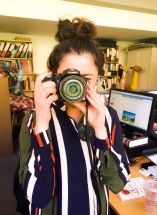
Let me first introduce myself, I’m Kiran Compton Verney’s Digital Marketing Intern. With an iPhone firmly in my right hand, a camera around my neck and a selfie stick hiding in my bag, it’s safe to say no day is ever the same as I help the Compton Verney team shape and maintain our online presence.

blog

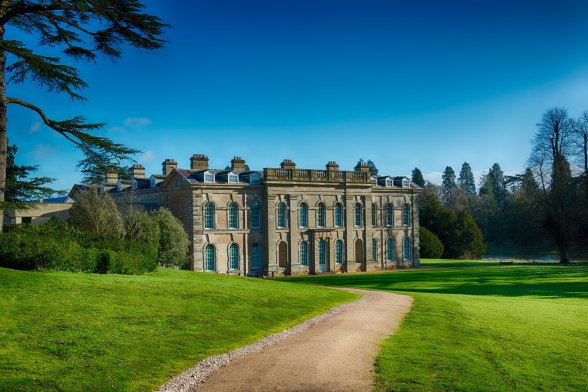
The world of digital is forever changing, with an abundance of social digital platforms to choose from. Arts organisations have been working hard, innovating and experimenting to find different ways to reach audiences. We’re extremely lucky here at Compton Verney Art Gallery and Park to have such diverse content potential right on our doorstep, ranging from arts collections to the behind the scenes of exhibitions, beautiful images of our ‘Capability’ Brown landscape to fun coverage of our events.

STP_1516_HDR2

Being a newbie Digital Marketer but having been brought up on social media, I wanted to share the challenges, tips & tricks I’ve learnt whilst working here:

Keeping it Visual

Let’s start with some easy statistics; Image posts on Facebook gain roughly 39% more engagement than text posts, Instagram users on average are 4x more engaged than Facebook and Twitter users. Audience love visual-led content, which is brilliant right? As an arts organisation this can surely be used to our advantage, as our buildings and surroundings are full of creativity. However, keeping these images fresh and interesting can be challenging. Luckily for Compton Verney, we have a wonderful volunteer photographer who takes high quality images for us, as well as passionate staff and volunteers who are always snap-happy around the site.

Structure, Strategy and More Structure

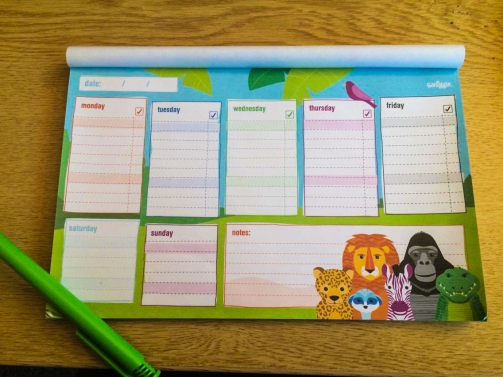
Planning is always a good idea, particularly if your organisation is spread across multiple social media networks. I could easily spend hours flicking between different tabs of social media sites, trying to figure out what to post/retweet next, before I know it there are a hundred tabs open in my browser and I’m lost in the depths of my internet browser. I found what helped me most was having a simple content plan for the week to organise my time efficiently. I’m also left with plenty of time to gather other instant content to upload, which importantly creates an authentic feel to our organisation’s online presence (more on this in the next point).

social media blog

Here is my weekly planner (adorable right?!)

It might be useful for you to plan daily, weekly or monthly depending on how ambitious the content is you’re planning.

Authentic is Fresh

Authenticity is arguably one of the most addictive reasons why we love social media. As users we can view instant reactions to what’s happening in the ‘here and now’. I feel this can humanize your organisation and can make the user feel like they are getting the ‘exclusive scoop’ of what’s going on. Some of Compton Verney’s most engaging posts have been quickly captured and shared media.

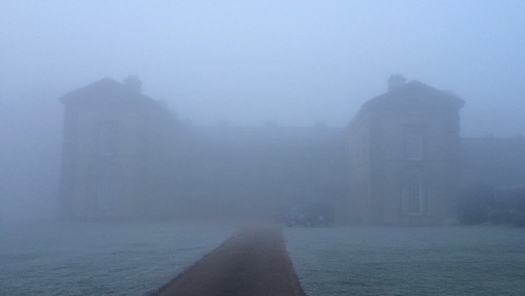
foggy house edit

A foggy morning at Compton Verney

giphy (1)

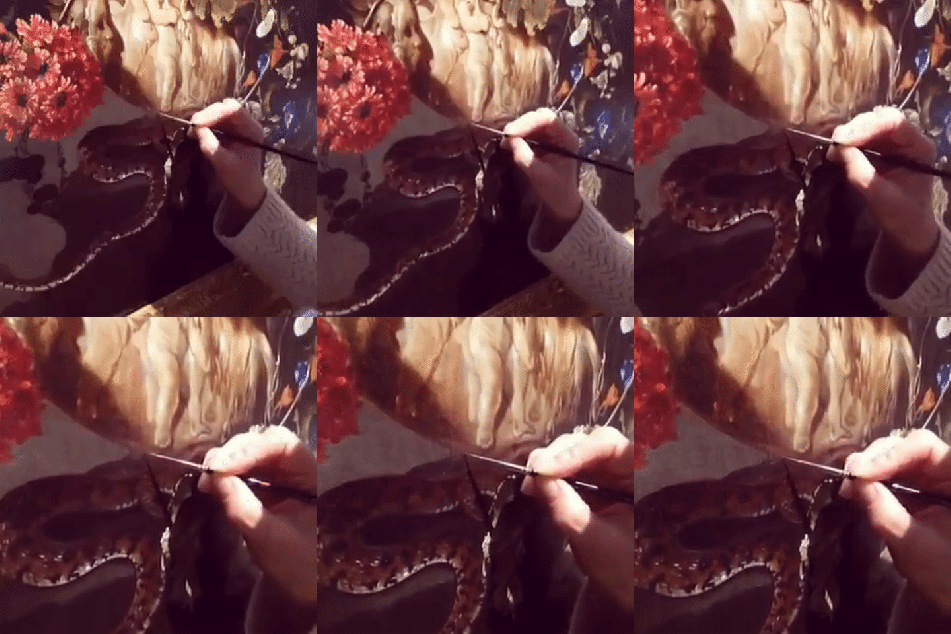
Art Conservation in the Naples Collection

Explore & Experiment

Exploration and Experimentation I feel is the most important aspect I’ve learnt about social media marketing. The digital world is booming and there’s lots of content out there, however there are lots of users ready to consume it. Being brave and trying new ways to communicate with your potential audience can be rewarding. There’s also lots of free ways to monitor your social media statistics, which is extremely useful to find out which content works best. Watch the bigger trends, create your own (be sensible of course) and most importantly enjoy yours and other’s content, as sharing has never been so fun.

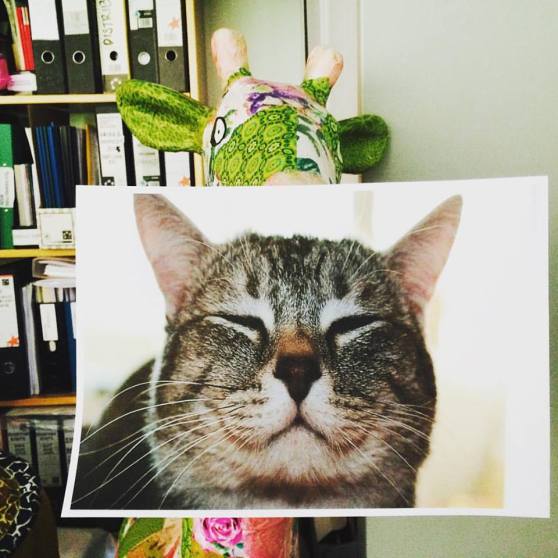
giraffes and cats

CVgiraffe #NationalCatDay


Please feel free to check out Compton Verney’s Facebook, Twitter and Instagram. We’d love to hear from you, comment or get touch through social media, if you have any questions or tips to share too!


THE DRAWINGS OF ALBERT H. BARNETT

The drawings of Albert H. Barnett are currently on display at Compton Verney next to the Folk Art Collection. We recently received a message from David Mason about these drawings and wanted to share it with the public.

My father Stan Mason worked in the Transport Department of the Gasboard in the 1970s. He was based at the Lord Street Depot in Birmingham. Albert Barnett worked there as a Yardman, keeping the yards tidy.Albert produced numerous biro drawings of old Birmingham, many relating to transport . He also drew a series of obituaries of well known people who had just died.These drawings were made on the backs of company order slips, envelopes and whatever he could lay his hands on. Albert would give these drawings to staff members , often noting on them ,how long they took to complete. Most of these drawings were  thrown away. Dad thought Albert’s drawings were of great interest and kept them untill he died in 1987.In all there were about 200 drawings that he kept, they are now with Compton Verney Art Gallery.

P1040574

After the British Gas Pensioners News Magazine  published an article on Albert I was able to contact a few of the retired members of staff who knew Albert. They told me that Albert was employed as “Registered Disabled” due to learning difficuties. He would disappear from time to time and the police were often asked to trace him.Once he was found in a Salvation Army hostel in London. When asked who was his next of kin , he would give the name of his warehouse manager. this made the staff think he had no family.

His behaviour at the works was erratic. He would take to making drawings anywhere that took his fancy. One incident was when he covered some ‘on loan’ skips with paint in his usual style. the skip company complained and Albert was made to pay two shillings a week as compensation.

P1040579

There seems to be many occasions when Albert was disciplined because of his behavior. On arriving in the manager’s offfice , he would stand to attention ,stamp his feet (army style) and say “hats off in Gaffer’s Office”. Eventually a sympathetic management gave him his own wall to draw on, on condtion he left the others alone.

He would often sneak into one of the delivery drivers vans for a little sleep. The drivers knowing this would drive off with him still inside , letting him out after a mile or so.

Albert never took a holiday but occasionally would take a day trip on a coach. When he went on one he would send all the ladies in the office a post card.

P1040577

After a while Albert was not allowed in the offices but he would see Dad making tea in the locker room and go and talk to him there. Dad always had time for him and would share his lunchtime sandwiches with him.

Unfortunately, there was often conflict between Albert and some of the drivers and this led to an incident when Albert threw some metal object at the men. It appears that he was dismissed after this incident.

No one could give me any information as to what became of Albert after the Gasboard. The people I spoke to seem to think that Albert was bought up in some sort of institution , that he had no relatives and was a very lonely man. He was proud of his drawings and ,I would like to think , he knew that they would be appreciated one day.

David Mason

P1040578

Periodic Tales; Installing David Nash’s Big Black in the entrance hall

AKA… getting a huge bit of tree through a small hole in the wall 

David Nash OBE RA (b. 1945) Big Black 2008-15 California redwood (charred)

David Nash OBE RA (b. 1945)
Big Black
2008-15
California redwood (charred)

On a sunny Friday in September, just before all the rest of the loans arrived for our Autumn exhibition, Periodic Tales, we devoted a day to installing a fantastic sculpture made of charred redwood into our entrance hall.

Artist David Nash primarily works with wood which has fallen naturally, or cut down due to natural disease. In using some of the classical elements – air, fire and water, Nash changes the form and surface of his sculptures. In this recently finished work he has burnt and charred the California redwood to form deep black, velvety surfaces. The charred wood becomes charcoal, a form of carbon, one of the modern chemical elements.

After the work arrived with us, along with the realisation that we would have about 2cm grace to get it through the door – and yes there was a moment when we just thought we’d be waving goodbye to it before we’d even unloaded it – we needed a forklift and several strong technicians to get it into the building.

IMG_2147   IMG_2160

We were ably assisted on the day by Momart fine art transporters and they brought all the moving and lifting equipment we would need. A rather large gantry was set up in the space and the work was slowly craned into position.

After a last minute check over from Compton Verney’s Curator Penny Sexton, and with some stabilising wedges fitted by our Head Technician John Crossley (or is he just having a rest after a hard day?) Big Black was ready to stand as a dominating and fascinating introduction and lead-in to Periodic Tales: The Art of the Elements.

IMG_2164 crop   IMG_2165 crop

Abi Pole, Exhibitions Manager

Technical Interlude pt. 2: Good housekeeping

As promised, here’s an update on one or two developments within the programming department at Compton Verney. Last time, I said I would go in to a bit more detail about our regular programme of conservation cleaning of the artworks in the permanent collections.

At this stage it is probably worth pointing out that the cleaning of artworks is a specialist task that should only be attempted by a trained conservator. As such we do not attempt to clean the surface of paintings, many of which can be rather delicate – we leave that to the pros who carry out any necessary remedial work.

Aneas   Vesperbild   BFA painting

Instead, we focus on regularly cleaning the frames and sculptures. No absolute rule can be given as to the frequency for cleaning  as this will vary depending on the location of the work within the building. Generally speaking, we only do it when an obvious layer of dust has developed. It is estimated that a frame will require dusting every 6-12 months in an average property.

In order to do this, we methodically work our way around every 2D and 3D artwork in the building with a soft brush and a backpack vacuum cleaner, loosening and sucking up as many rogue particles as possible.

JC conservation cleaning 1   Conservation cleaning 4

Conservation cleaning 3   JC conservation cleaning 2

Such careful work, affords the cleaner a rare and intimate view of the surface of the paintings and sculptures, to the extent that apart from getting an up-close look at the particular mark-making techniques of an artist, one becomes quite adept at differentiating old surface consolidation from potentially fresh damage.

I hope you enjoy the images!


Meet Artist Rosa Nguyen

On Tuesday 21 July artist Rosa Nguyen visited Compton Verney to talk to members of the public and start off a family workshop in the studio space.
In the morning visitors were shown Rosa Nguyen’s new commission Gardening with Morris located in the Arts & Crafts House: Then and Now exhibition. Gardening with Morris is funded by Arts Council England.

Rosa in front of commission

Rosa Nguyen started to talk about her practise as a trained ceramicist and glass blower.
She would use scientific glass used usually used for labs and experiments, she sand blasts and engraves through the process of making the glass. The shapes for her 3D objects relate to seeds pods, bulbs and natural forms, incorporating the objects into the environment.
The idea behind Gardening with Morris came from working with holistic view of nature. Rosa Nguyen has previously visited Japan and been influences by the Buddhist art of flower arranging being regarded as high art.
In Japanese artists explore the ideas around the use of spaces and create environments which can be assembled and taken down, moved and reassembled to another location. This piece will be removed and travel to another touring venue later on in the year.
Gardening with Morris has become a living object which is active by the plants, becoming energy lines. The glass acts as moveable objects and can be rotated at any time with the control of the artist. The objects and wallpaper work together to create the patterns.
William Morris wallpaper behind the objects has been blocked out, removing sections of the wallpaper and highlighting areas of interest. Rosa Nguyen explains how she laid the Morris and Co wallpaper along the floor in her studio and started to ‘plant’ acting as if she was working in an allotment. She began to cover up areas and revealing the paper with soil.
Passionate about Japanese minimalism the William Morris wallpaper became unbearable and she wanted to introduce the nasty parts of the garden that without these the garden wouldn’t grow.

DSCF3457

The visitors continued to ask questions and discuss the process used in the installation Gardening with Morris.
In the afternoon Rosa greeted families in the studio space and started them on a practical workshop using materials and processes related to her work.

DSCF3462

She introduced stencil printing over Morris & Co wallpaper covering up elements of the wallpaper and adding their own designs.

DSCF3465

Many families dropped-into the activity enjoying drawing natural objects and cutting them into stencils. They would then print the stencils onto wallpaper over the William Morris patterns laid out on the studio floor.

DSCF3508

The activity continued throughout the week to build up a layered design. The final piece is displayed on the ‘Wall of Wallpaper’ in the Atrium next to the café & Lawn Restaurant.

DSCF3485

The ‘Wall of Wallpaper’ will be on display during the summer holidays.

Join in our the other activities taking place this summer:
Galleries: Every Picture Tells a Story
Tues 28 July- Sun 2 August, 1.30pm
Discover artists and help create the story behind the artworks in our collections.

Studio: Artspace
Tue 4 August- Fri 4 Sept,
Drop-in 11am-4pm
Designs a miniature model of your favourite room in a shoebox

Technical Interlude pt.1: John Crossley, Head Technician


The nature my role takes me into the galleries perhaps more than any other member of the permanent staff at Compton Verney. I check all of the lighting to ensure the exhibits are displayed to their full potential and use the time before opening to perform a condition check on the artworks. I also see to any maintenance tasks that require attention such as repairing the oak floorboards on the ground floor.

The main focus of my work is associated with the planning of the temporary exhibition programme. This includes the fabrication of plinths for 3D artworks – like the fireplace currently supporting the Andrew Wicks vessels in the Arts and Crafts House exhibition (pics below immediately after I finished fabrication and once the installation in the space was complete). I also install audio-visual projections such as the short film currently on show in the Harts Silversmiths exhibition. I work closely with the Exhibitions Manager and the Curators at Compton Verney to arrange and manage the installation of temporary exhibitions, liaise with builders and painters, hire technical art handlers and oversee contractors working on-site.

fireplace 1fireplace 2

Compton Verney’s temporary exhibition installations are the most thrilling (and often nerve-racking) part of my role since we aim to get the shows hung and open to the public as soon as possible. There are fantastic challenges, such as hanging a Van Dyck with a courier from The Royal Collection watching your every move. Some I’d rather forget, like the time paintings from Iceland due to form part of the Volcano exhibition in 2010 were bumped off the flight in favour of several crates of Haddock, Halibut and Herring. The catch of the day seemingly more note-worthy than any pre-arranged cultural exports!

Engaging with partners from prestigious institutions and working closely with a huge range of traditional and contemporary artwork from all over the world makes the time pressures associated with installing such a varied programme worthwhile. I am fortunate to get an intimate look at the works as they are unpacked and seeing a show develop from design through to realisation is always highly rewarding.

Jack pic

Next time, I’ll talk a bit more about some of my regular duties looking specifically at the rolling programme of conservation cleaning of the permanent collections at Compton Verney.

#ParrWall

In response to The Non-Conformists Photographs by Martin Parr exhibition, members of the public was invited to submit parresque images to twitter and facebook using #ParrWall.
Each week the photographs were printed off and placed on the atrium wall at Compton Verney in the public area in-between the café and The Lawn Restaurant.
Many people viewed these photographs and a few twitted their responses.
In third place: Done Roaming by Margaret Jackman, 17 April 15

https://twitter.com/MargaretJackman/status/589001796477157376

Second place: Posing by Mart Kelly, 13 March 15

https://twitter.com/martkelly/status/576389840683565056/photo/1

First place: Cheltenham Gold Cup 2015 by Claire Rosser, 1 April 15

https://twitter.com/Idlicoteclaire/status/583330111388278784/photo/1

Many heads are better than one

Day in the life of John Bishop, Learning deliverer

I had a busy couple of days at Compton Verny last week the 14 and 15 May.
I turned up as a volunteer as usual on Thursday 14 May ready for a steady cutting card and preparing classrooms and items for the learning team.
Alice Kirk, Learning Programmer greeted me with “O John Boy thank goodness you have arrived!”
Vix Powell, Forest School leader is off on sick leave and it was raining hard. It was the day and night of Martin Parr’s talk. He is a famous documentary photographer who’s attending Museums at night. Jo Essen, Learning Programmer was busy with Imogen Morris, OYAP organiser putting the rooms together for his talk, book signing and performances by OYAP musicians.

GB. England. Yorkshire. Hebden Bridge. Nasebottom. The Ancient Order of Hen-Pecked Husbands Annual General Meeting. Easter Monday, 1977.

GB. England. Yorkshire. Hebden Bridge. Nasebottom. The Ancient Order of Hen-Pecked Husbands Annual General Meeting. Easter Monday, 1977.

I quickly set about helping Alice put together some items for the forest school then I was sent on an errand to collect some items we needed for the children for them to make bird feeders. This meant me driving to Wellesbourne and the CO-OP store to hunter gather Cheerios, lard and Vaseline. (Yes, I know strange brew?)
Still chucking down with rain, I headed off to the store. I quickly found the Cheerios and the lard but the CO-OP, it only had very expensive tiny tins of Vaseline. Instead I called in at the chemists and found a larger pot.

Back at Compton Verney, Clifford Newgas another learning volunteer had arrived as usual. We were in a bit of a whiz and I explained to him what was happening and we returned to the woods where we set about our task of preparing the site in the forest.  The early-years session started around mid-day, it was still raining continuously and a pretty chill in the air, we will waited for the children to come and they did.

Clifford headed back to the house and set about tasks of printing and cutting flyers for the evening, while Alice and I got to play in the wet, rain and wind with the children who apparently never noticed any of these elements. We made dens, hunted bugs and painted leaves, sticks and made wonderful bird feeders with the items I had gathered at the shops.

Forest Schools early years

Forest Schools early years

As an ex fire-fighter,  we pretended the camp fire was ablaze and then we pretended it was a pond. The children built a hotel and then I cut out some paper fish which the children caught with pretend fishing rods. I helped them cut up some paper chips and we cooked all these wonderful creations on the blazing pretend fire. The children potted them and imagined to eat them. It made Alice and I pretty hungry as by 2:30pm we had not even had a cup of tea or coffee. The children left at this point and we cleared up the sodden camp and returned looking like intrepid lost explorers to the house.

After our lunch we cleaned up the forest school items and helped out with the preparation for the oncoming Museums at Night and the arrival of photographer Martin Parr and guests. I was to be door man, ticket checker and tweeter of the special event. I, as the rest of the team had brought a change of clothes and a good job I did!

We busied ourselves until Martin Parr arrived Imogen was busy working with the Bretch Hill and Grimsbury community (OYAP project) and setting up for the musicians. Catering had set up Paella and macaroni cheese. Jo was sorting out digital cameras and printer for the family photography workshop which will be displayed on the #ParrWall.

Parr on Parr:  An Evening Talk by Martin Parr

Parr on Parr: An Evening Talk by Martin Parr

I took my position on the door and had a flashback to my security work back stage at the NEC arena. The guests came and Martin Parr did a great talk and a super book signing in which he was charming and very approachable. The evening continued with music, food and fun. I left around 8:30pm for home and a quick prep for the next day where I would be delivering Parr and Canaletto to Stratford High School my very first up front delivery.

Book signing with Martin Parr

Book signing with Martin Parr

I arrived early about 9am and had to set up the class rooms ready to deliver the session around 10am the students arrived then and Stacey Righton, Ann Loscombe the other learning deliverers and I directed them to the Learning Centre. After a brief introduction in which I admit I faltered just a little we went to work talking and asking them, their thoughts on three artists Canaletto, Martin Parr and Faye Claridge. Faye has a super size Kern Baby situated in the grounds. She also has her photographs in the café area.

After the students had their lunch we were busy with collage work until they left for their bus around 2:30pm. We then had to turn the rooms around for the evenings events. It was a full on first day and I thought overall I feel I had done a good days work. I will be better next time as the first day of anything is pretty traumatic.

Collage

Collage on top of a Parr or Canaletto

Thanks to the learning team for all their help and guidance to get me through the day.
by John Bishop

Internationally renowned artist Yinka Shonibare MBE

Compton Verney is delighted to be shortlisted by Yinka Shonibare MBE to host Museums at Night event at the end of October 2015.
Staff will work with Shonibare to turn the idea of an elite supper club for the few into a sensory cultural feast for the many

Contemporary reflections on the issues and ideas raised by particular works in Compton Verney’s collections will be provided through performance, food and costume. Including Reynolds, Sir Joshua (1723-92) Mrs Baldwin in Eastern Dress.

Reynolds,-Mrs-Baldwin-in-Eastern-Dress-for-the-web

Reynolds, Sir Joshua (1723-92) Mrs Baldwin in Eastern Dress.

Party goers will dress flamboyantly and enjoy sensory treats, specially created canapés and a range of performances by young creatives.

Yinka Shonibare MBE Cake Man II, 2014 Courtesy of the Artist.  Photograph: Stephen White, 2014.  © The Artist

Yinka Shonibare MBE
Cake Man II, 2014
Courtesy of the Artist. Photograph: Stephen White, 2014. © The Artist

Shonibare’s work explores issues of race and class through the media of painting, sculpture, photography and film. His trademark material is the bright ‘African’ batik fabric he buys at Brixton market. The fabric was inspired by Indonesian design, mass-produced by the Dutch and sold to the colonies in West Africa becoming in the 1960s a new sign of African identity and independence.

Biography:

  • Fine Art at Byam Shaw College of Art (now Central Saint Martins College of Art and Design) and then at Goldsmiths College, where he received his MFA, graduating as part of the ‘Young British Artists’ generation.
  • Following his studies, worked as a arts development for Shape Arts
  • Shonibare was a Turner prize nominee in 2004 and awarded the MBE, which he has added to his professional name.
  • Produced the first public art commission on the Fourth Plinth in Trafalgar Square ‘Nelson’s Ship in a Bottle’ in 2010
  • In 2013 he was elected Royal Academician by the Royal Academy of Arts.
Yinka Shonibare MBE Nelson's Ship in a Bottle, 2010 Courtesy of the Artist and National Maritime Museum, Greenwich.  Photograph: Stephen White, 2010.  © The Artist

Yinka Shonibare MBE
Nelson’s Ship in a Bottle, 2010
Courtesy of the Artist and National Maritime Museum, Greenwich. Photograph: Stephen White, 2010. © The Artist

The gallery has made it to the final four in a national competition organised by Connect! and faces competition from Hackney Museum, the Museum of Oxford, the Novium and Towcester Museum.
We are completely reliant on YOUR VOTES to make this great opportunity to work with Yinka Shonibare MBE happen. Voting opens at 11am on Friday 1 May and continues until 8pm on Saturday 16 May. Make this exciting project happen by casting your online vote, all you will need is a valid email address to vote. http://bit.ly/YinkaShonibare

man-w_b